Sunday, 12 January 2014

Andrew Wyeth

Andrew Wyeth
Andrew Wyeth (1917 - 2009) was born to a wealthy Swiss/German family  in Chad's Ford, Penssylvania, and lived there until his death. Chadds Ford was a rural area which greatly influenced Wyeth's work as he would document the lanscapes as well as the people who lived there - although it is arguable that his greatest influences came from his artist father, Newell Convers Wyeth (1882 - 1945).

N.C. Wyeth, himself, was infamous for his elaborate water-colour and oil
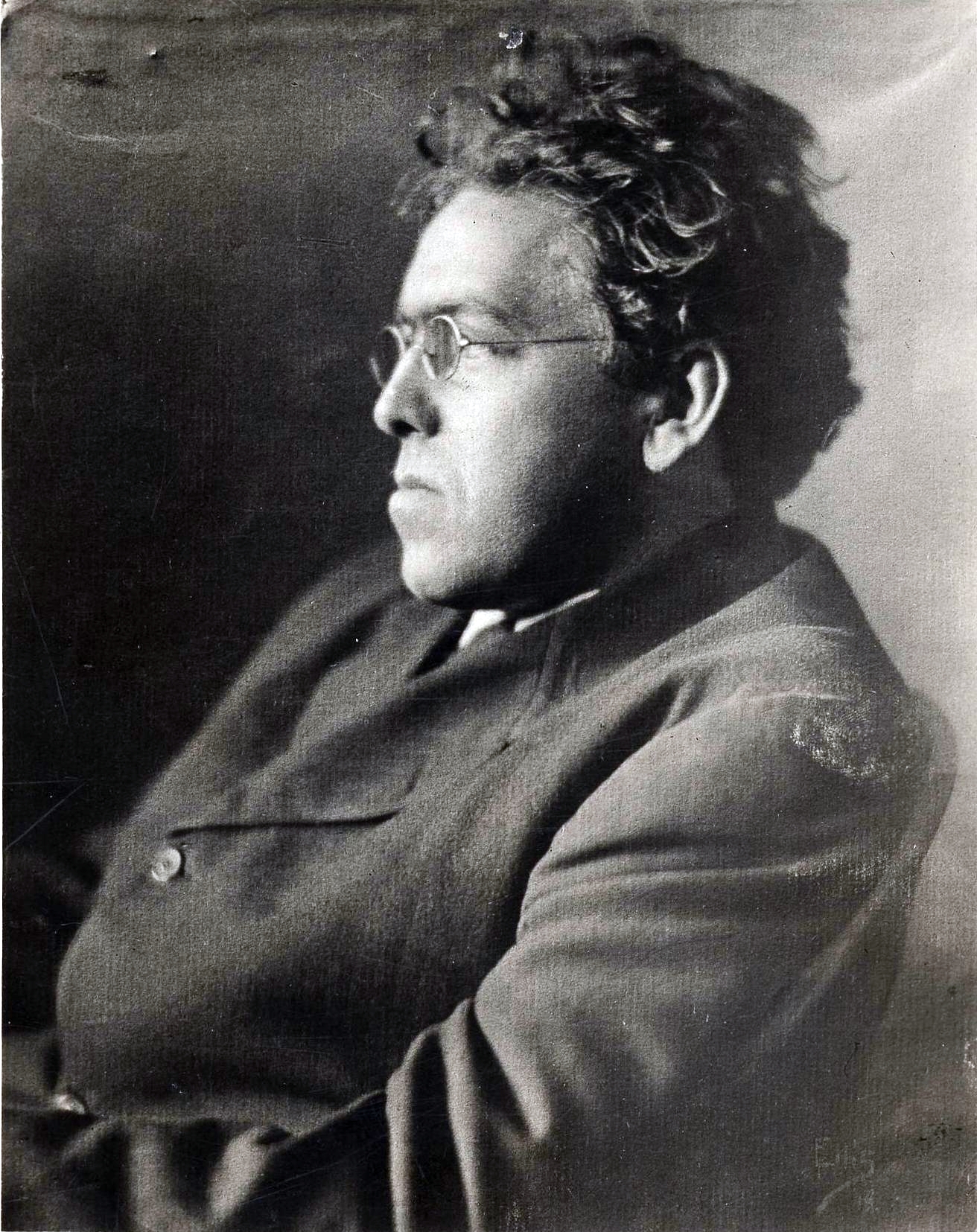
N.C.Wyeth
illustrations for Scribner's Magazine as well as Scribner's Classics' Treasure Island which contained melodramatic images of Pirates at battle. 


 This aspect of fairy-tale heroism is something that was installed within A. Wyeth's psyche from a young age. In a recent documentary entitled 'Micheal Palin in Wyeth's World'  Palin investigated the work of A. Wyeth whose Niece, Robin McCoy, reveals that, as a child, her uncle would play in the nearby woods, re-enacting the tales of his father's paintings - "It was always what pa said what pa did ... He created this world for us all". So it becomes apparent that A. Wyeth was heavily influenced by his father in many aspects. 

Also, due to suffering from a number of illnesses as a child, A. Wyeth was home schooled by his father because he was deemed too fragile to attend a conventional school. This factor made it inevitable for the young Wyeth to be heavily influenced by his father's artistic style - perhaps at a subconscious level. Micheal Palin comments "He wanted his son to be free, both artistically and personally".

Wyeth's Work

In 1937 A. Wyeth held his first exhibition at New York's Macbeth gallery, and sold out. Because of his father's tremendous impact on him, Wyeth's success was as much a victory for his father as it was for himself however the artist longed to escape the shadow cast by his father's success.


This attempt at escaping is evident within Wyeth's style as he decided to work as a fine artist as opposed to a commercial artist. Also, Wyeth's technique differs largely to that of his contemporaries as he often enjoyed painting with a medium known as egg tempara which requires mixing egg yolk with pigment and water.


Andrew Wyeth: Early Self Portrait 
(1938)
Brian Baade, conservator at the Brandy-Wine Museum, explains that the medium pre-dates the renaissance and was dominant in Europe from the middle ages up to the 1500s. This somewhat caused the young Wyeth to become an outsider of the art world especially during the 1940s as the artistic Zeitgeist lent towards Abstract Expressionism - as Joyce Stoner, conservator at the Brandywine River Museum, mentions "Andrew was fascinated with outsiders".


Newell Convers Wyeth: Self Portrait With Pipe
Circa (1915-1920)


In this early self portrait (above), A. Wyeth used egg tempara and it is evident that this medium is effective in depicting colour and light, whereas oils can sometimes appear rigid and somewhat 'dark' - especially with the passage of time. You can see this when comparing the painting with N.C. Wyeth's self portrait (right).

On a less superficial level, A. Wyeth's self-portrait has a mischevious quality about it. Although, at a glance, it emits a sense of seriousness, the painting portrays A. Wyeth in a sarcastic light. It almost appears to be a feigned, or mocking, seriousness. It becomes apparent, too, that the lightness of A. Wyeth's skin contrasts his clothing however the background seems to contain both the dark and the light - emphasised by a chiaroscuro technique used by those such as Caravaggio and Giovanni who used light to emphasise drama and the three-dimensions. 


http://www.ncwyeth.org/ncbio.htm 21:38 Saturday 4/01/14
http://books0977.tumblr.com/post/27845557681/louise-loved-to-climb-to-the-summit-on-one-of-the - Nc Wyeth Lady painting 20:16 07/01/14

http://www.christies.com/lotfinder/paintings/newell-convers-wyeth-self-portrait-with-pipe-5752478-7details.aspx N.C. Wyeth Self Portrait 20:37 07/01/14

Micheal Palin In Wyeth's World: BBC TWO, Sunday 29th December 2013,21:00

Saturday, 9 November 2013

A Picture of Liz...


The Pop art movement exploded from mid-50s Britain, and had it's impact on American culture by the late 50s. One of the pioneering figures of this American Pop Art movement was Andy Warhol (1928-1987) who's foundations were in commercial art, however he is widely appreciated as a studio artist due to his extensive production of screen-printed portraits - often of celebrities and popular brands. 
'Liz' 1964 Synthetic polymer,
 paint and silkscreen on canvas
(101.6 x 101.6cm)


This particular piece is a portrait of actress Elizebeth Taylor (1932-2011) known for her parts in films such as Lassie Come Home (1943) and Cleopatra (1963). Apart from acting Taylor has been celebrated for her work as an AIDS activist and an embracer of the gay community - a rarity of the time.


Technique

To create such prints Warhol would use a silk screen - a mode of screen-printing which soon became his signature technique. This would be carried out by laying canvas material onto the ground on to which Warhol would then place a specially prepared silk-screen with the image masked on. Sometimes Warhol would work on monotonous images although many of his pieces involve layers as demonstrated in his paintings of Taylor.

Here is an insight of how Warhol used to create his prints. He makes a print of Marlon Brando, with assistance from Gerard Malanga. 


It is evident that Warhol was a prolific worker and created many variations of this image, experimenting with colour and composition as can be seen in many of his prints. It can also be observed that components such as the lip and eye makeup appear to be off register - adding to the atmosphere of the piece. 


Conceptual Qualities

It seems that Warhol was preoccupied, obsessively so, with ideas of fame, glamour and superficiality but in a way that may be considered satirical or humorous. As the once claimed "I am a deeply superficial person". 

This idea of deep superficiality is something that can be seen in Warhol's paintings of Taylor as he has depicted a media icon that is known for her outstanding physical beauty however the artist has portrayed her in a darker light - like a journalist who scratches away at the surface, revealing the dirt that lies beneath. Warhol creates this atmosphere by allowing the background to bleed through thus creating a sense of ethereality which is exaggerated by the darkness seeping in from the left. This darkness seems to drown out Taylor's violet eyes for which she is notorious for.

This darkness is contrasted by the vivid red and blue, which Warhol has applied like make up on a clown, thus turning Taylor's portrait into a sinister caricature of celebrity. At a glance the viewer may judge this image according to the slight smirk that Taylor seems to be exhibiting, however this smile may be intended as a façade to hide a dark truth.

Elizebeth was even considered the "personification of charisma whose highly public life charged with drama, tragedy, and romance, this iconic muse was a perfect vehicle for Warhol's vivid silk-screen portraiture ..." (Review from the Gasgosian Gallery)

Ultimately, Warhol has painted an image made of layers thus portraying Taylor as an illusive individual who has become trapped within the trade of celebrity - a delusional world of false expections. Begging the question:  

What is a persona and what it real?


(Source(s):
 http://artdaily.com/news/50569/Exhibition-of-portraits-by-Andy-Warhol-of-the-late-Elizabeth-Taylor-at-Gagosian-Gallery#.Ul-2OFA3tjk
http://artobserved.com/2009/06/go-see-paris-warhols-wide-world-a-retrospective-on-andy-warhol-at-the-galeries-nationales-du-grand-palais-through-july-13th-2009/ http://www.artnet.com/magazineus/features/saltz/andy-warhols-portraits-of-liz3-24-11.
asp  )